-
 Friends and family are sharing what they'll miss about Chris Andersen and Miles Elliott. Their deaths have also further shaken the wildland fire community, which has lost several firefighters in this intense and ongoing season.
 -
The Sevier County sheriff said Saturday that the pilots were killed when their Sikorsky Skycrane helicopter went down Friday morning. The helicopter was among those fighting a fire in the Fishlake National Forest.
-
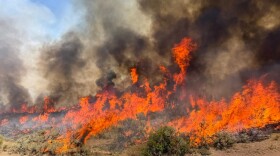 The Sikorsky S64 helicopter was one of seven working a fire in central Utah that was caused by lightning on July 27. The National Transportation Safety Board and Federal Aviation Administration will investigate.
 -
 The initial power outage last week, caused by the Monroe Canyon fire, lasted for 30 hours. Garkane Energy Cooperative Incorporated will start more permanent repairs to power lines Aug. 6.
 -
 The Monroe Canyon fire has burned 75 square miles, and the wind-whipped fire along the Grand Canyon has become a "megafire." Both are burning so hot that they are spurring the formation of "fire clouds."
 -
 Northern and Southern Utah have been in two different worlds over the winter when it comes to snowpack.
 -
 Human-started fires in 2024 have already surpassed Utah's total for all of last year. With months of dangerous conditions remaining and another firework holiday looming, fire officials are on alert.
 -
 As insurance companies re-evaluate risk, they’re increasing premiums or refusing renewals for parts of Salt Lake City where residents might not think of themselves as living in a high wildfire risk area.
 -
 The latest outlook from the National Interagency Fire Center predicts above-normal potential for significant fires in southwest and northwest Utah this summer.
 -
 Researchers hope the study can help fire managers better understand when it's safe to let fires burn as part of the natural cycle.
 -
 Of the 26 wildfires that started over the weekend, all but three of them were human-caused. There are five still burning.
 -
 Fires are monitored after they’re contained, but hot spots can spread when there’s high wind and temperatures, as well as low humidity.

© 2026 KUER 90.1
Play Live Radio
Next Up:
0:00
0:00
Available On Air Stations


