-
 The Utah State Board of Education has entered a data privacy agreement and is partnering with Google to offer a version of its AI model to schools statewide.
 -
 Schools don’t need as many new English learners to qualify, and the Utah State Board of Education now has the discretion to award emergency funding to schools that demonstrate need.
 -
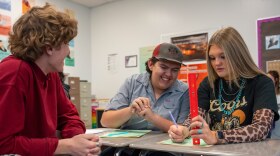 Utah tried to infuse data science into its math standards. That effort got caught up in a broader debate about rigor and what math high schoolers need.
 -
 Award-winning authors and two Utah high school students say the law that has banned 22 books in all Utah public schools violates their First Amendment rights.
 -
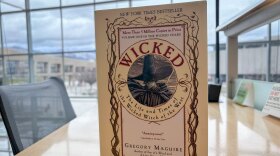 Twenty-two books are now banned in Utah K-12 schools. In addition to “Wicked,” the popular young adult novel “The Perks of Being a Wallflower” and “Nineteen Minutes” were also added to the ban list.
 -
 Mientras algunas escuelas reportaron aumentos porcentuales grandes en la cantidad de estudiantes principiantes de inglés este año, ninguna cumplió con el umbral de 30 estudiantes establecido por el proyecto de ley HB42.
 -
While some schools reported large percentage increases in the number of beginner English learners this year, none met the 30-student threshold established by HB42.
-
 Chris Agnew, director del Generative AI for Education Hub (Centro de Inteligencia Artificial Generativa para la Educación) en la Universidad de Stanford, calificó el enfoque de Utah hacia la inteligencia artificial en la educación como uno de los más coordinados y estratégicos del país.
 -
Chris Agnew, director of the Generative AI for Education Hub at Stanford University, called Utah’s approach to AI in education one of the most coordinated and strategic in the country.
-
 In January, the Utah State Board of Education said students could not bring banned books to campus — even their own copies. But after more legal review, the board is reversing course.
 -
 Some of the grants being withheld are for English language learners and before- and after- school programs. The Trump administration said it needed to review them.
 -
 School psychologist Naomi Varuso said she’s observed a “severe increase in aggressive behavior — not just verbal aggression, but physical aggression.”

© 2026 KUER 90.1
Play Live Radio
Next Up:
0:00
0:00
Available On Air Stations


