

The Utah Supreme Court has dismissed the Legislature’s redistricting appeal and lawmakers’ request to let the state keep using its 2021 congressional map.
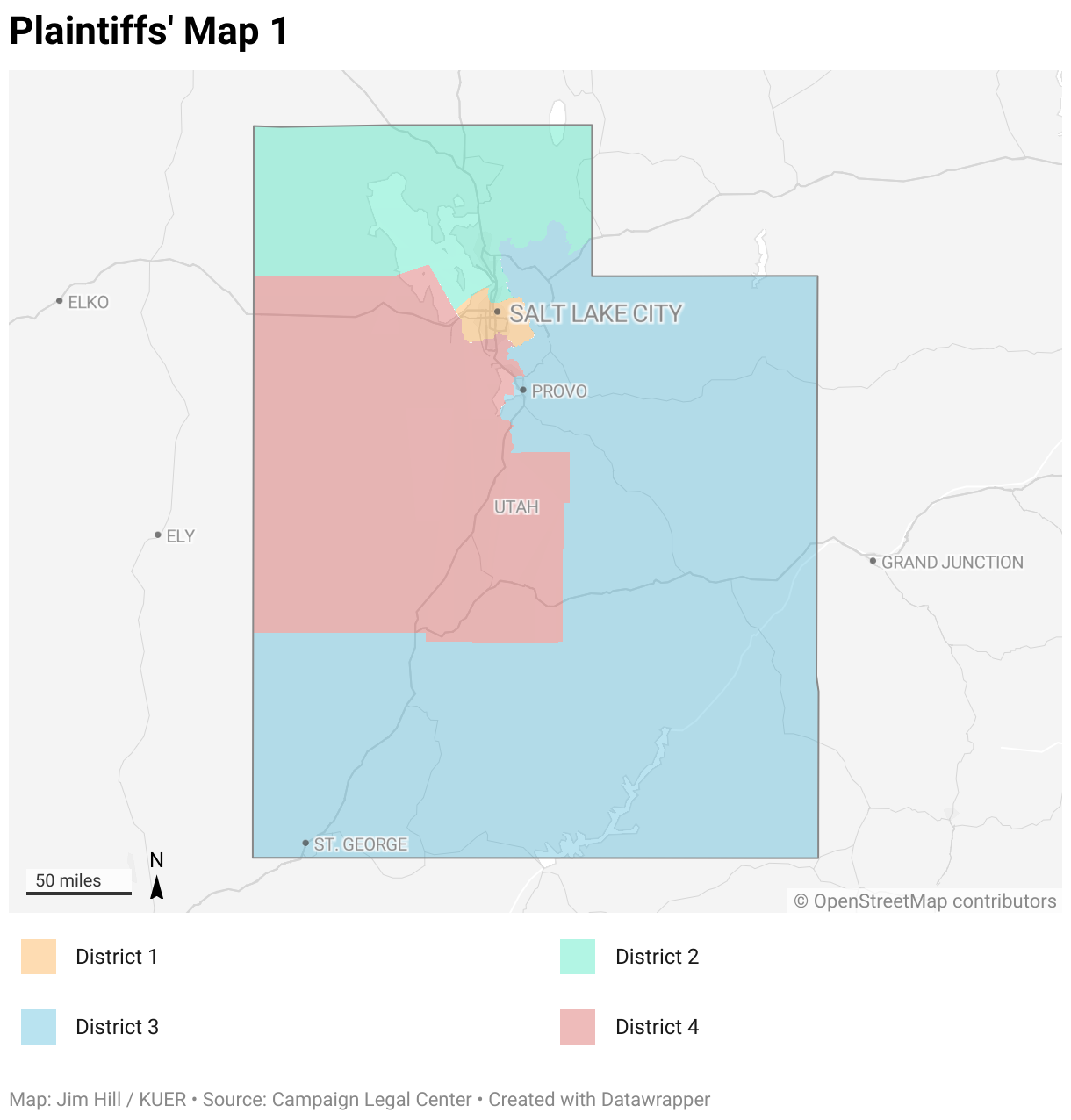
The Legislature wanted to appeal Third District Court Judge Dianna Gibson’s ruling, where she found lawmakers had violated the state constitution and threw out Utah’s existing congressional map. After a series of hearings, in November Gibson selected a new map that is set to be used in the 2026 midterms, one submitted by the plaintiffs in the case.
The state’s previous map had four safe Republican districts, while the redrawn map created a district centered on Salt Lake County that’s favorable to Democrats.
The request to appeal Gibson's August 2025 ruling, the one that threw out the map, went before a panel made of Chief Justice Matthew Durrant, Justice Paige Petersen and Associate Chief Justice Jill Pohlman.
In their Feb. 20 ruling, the three justices said lawmakers could have appealed sooner, and if the Legislature took other, quicker routes, “we would have had statutory jurisdiction over those appeals even though those orders were interlocutory.” Gibson outlined a similar stance in a previous ruling, at the time calling the Legislature’s strategy “imperfect.”
The justices said the way the Legislature ended up appealing the case was “improper and we lack jurisdiction over Legislative Defendants’ appeal.” Because of that, they wrote that the Legislature's request to stop Gibson’s injunction of the 2021 map is also dismissed as moot.
The justices didn’t wade into the substance of the case, and whether Gibson’s August ruling was right or wrong, but dismissed the appeal because it was procedurally improper since a final judgment in the case hadn’t been made yet.
“To be sure, we agree with the district court that this case, and its August 25 Order, raise important legal issues that warrant timely appellate review,” the ruling said.
Lt. Gov. Deidre Henderson’s lawyers had told the high court that her office and county clerks needed to know by Feb. 23 which map would be used in the 2026 midterms so that they could properly prepare for the election.
In a statement responding to the Friday order, Senate President Stuart Adams said, “Neither the Utah Constitution nor the U.S. Constitution empowers courts to impose a map that elected representatives did not enact. Once again, the chaos continues, but we will keep defending a process that respects the Constitution and ensures Utah voters across our state have their voices respected.”
At the same time, Utah’s redistricting fight is still in federal court, where the court-ordered map has also been challenged. A different three-judge panel heard arguments Feb. 18 after two of Utah’s Republican members of Congress, Burgess Owens and Celeste Maloy, sued, along with several Utah elected officials. They’re asking the federal court to block the state’s new map. According to the Utah News Dispatch, one of the judges questioned whether the federal panel should wait until the Utah Supreme Court made its ruling.


